Kindergarten End of Year Assessment PDF Free: A Comprehensive Guide
Navigating kindergarten assessments requires readily available‚ free PDF resources for educators. These tools help evaluate student progress‚
spanning academic skills‚ social-emotional growth‚ and physical development‚ ensuring a smooth transition.
What is a Kindergarten End of Year Assessment?
A Kindergarten End of Year Assessment is a systematic process used to evaluate a child’s skills and knowledge acquired throughout their kindergarten experience. It’s a crucial snapshot of their development across multiple domains – academic‚ social-emotional‚ and physical – before they transition to first grade. These assessments aren’t about grading‚ but rather understanding each child’s strengths and areas needing further support.
Typically‚ these assessments utilize a variety of methods‚ including observations‚ checklists‚ work samples‚ and short‚ focused tasks. Increasingly‚ educators are leveraging readily available PDF resources to streamline this process. These free PDF assessments offer standardized ways to measure progress in areas like letter recognition‚ counting‚ and social interaction. The goal is to provide a comprehensive profile of each student‚ informing future instruction and ensuring a successful start to their elementary school journey.
Why are Kindergarten Assessments Important?

Kindergarten assessments are vital for several key reasons‚ impacting students‚ teachers‚ and parents alike. They provide a baseline understanding of each child’s skills‚ identifying strengths and areas where additional support is needed early on. This early identification is crucial for preventing learning gaps from widening as students progress through school.
For teachers‚ assessments – particularly those utilizing convenient PDF formats – inform instructional planning. They allow educators to tailor lessons to meet the diverse needs of their students. Free PDF assessment tools offer a cost-effective way to gather valuable data. Furthermore‚ assessments facilitate clear communication with parents‚ providing concrete examples of their child’s progress. Ultimately‚ kindergarten assessments ensure a smoother‚ more successful transition to first grade and beyond‚ setting the stage for lifelong learning.
Key Areas Assessed in Kindergarten
Kindergarten assessments comprehensively evaluate a child’s development across multiple domains. These typically include academic skills – like letter and number recognition‚ pre-reading skills‚ and early math concepts – often found within readily available PDF assessment resources. Social-emotional development is also key‚ observing a child’s ability to interact with peers‚ manage emotions‚ and follow directions.
Physical development‚ encompassing both gross and fine motor skills‚ is another crucial area. Free assessment PDFs often include checklists for observing these skills. A holistic view is essential‚ recognizing that these areas are interconnected. Effective assessments‚ easily accessible in PDF format‚ provide teachers with a complete picture of each student’s readiness for first grade‚ guiding individualized instruction and support.
Academic Skills Assessment
Academic skills assessments in kindergarten‚ often available as free PDF downloads‚ focus on foundational literacy and numeracy. These evaluations typically assess letter recognition – both uppercase and lowercase – and phonological awareness‚ including rhyming and initial sound identification. Early math skills‚ such as counting to 20‚ shape recognition‚ and basic pattern identification‚ are also commonly evaluated.
PDF resources frequently include worksheets or observation checklists to gauge these abilities. The goal isn’t mastery‚ but rather to understand a child’s current skill level and identify areas needing support. These free assessments provide valuable data for teachers to tailor instruction and ensure each student builds a strong academic foundation before progressing to first grade.
Social-Emotional Development Assessment
Assessing social-emotional development in kindergarten‚ often utilizing free PDF checklists‚ is crucial for holistic student understanding. These assessments move beyond academics‚ evaluating a child’s ability to follow directions‚ share with peers‚ and manage emotions appropriately. Observation-based tools are common‚ focusing on behaviors like cooperation‚ empathy‚ and self-regulation.
Free PDF resources often present scenarios or rating scales to help teachers document a child’s interactions and emotional responses. The aim isn’t to diagnose‚ but to identify students who might benefit from additional support in developing these vital life skills. Understanding a child’s social-emotional wellbeing informs classroom management and fosters a positive learning environment.
Physical Development Assessment
Evaluating physical development in kindergarten‚ often aided by free PDF assessment tools‚ focuses on both gross and fine motor skills. Gross motor skills encompass activities like running‚ jumping‚ and climbing‚ while fine motor skills involve tasks requiring smaller muscle groups – such as drawing‚ cutting‚ and buttoning.
Free PDF checklists frequently outline developmental milestones‚ allowing teachers to observe and record a child’s proficiency in these areas. Assessments aren’t about strict pass/fail criteria‚ but identifying areas where a child might need encouragement or support. Observing physical abilities informs adaptations for classroom activities and potential referrals for occupational or physical therapy if concerns arise. These assessments contribute to a comprehensive understanding of each child’s overall development.

Types of Kindergarten Assessments
Kindergarten assessments vary: formal tests‚ informal observations‚ and portfolio collections. Free PDF resources support each method‚ providing structured tools for comprehensive evaluation.
Formal Assessments
Formal kindergarten assessments are standardized tests designed to measure specific skills. These typically involve structured questions and scoring rubrics‚ offering quantifiable data on student performance. Many free PDF resources provide sample formal assessments‚ or links to publicly available options‚ covering areas like letter recognition‚ phonological awareness‚ and early math concepts.
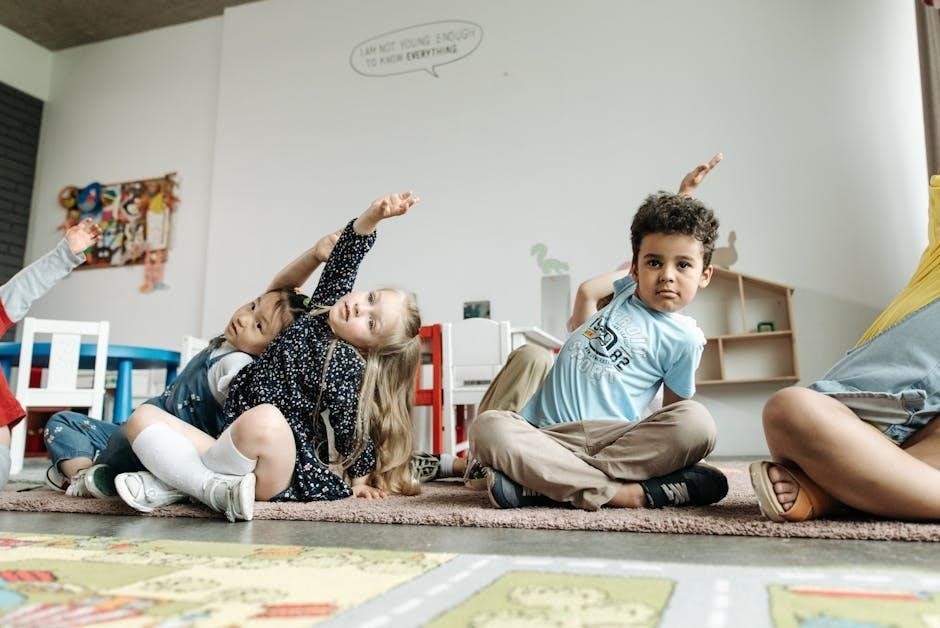
These assessments often compare a child’s performance to established norms‚ helping educators identify students who may need additional support. While valuable‚ it’s crucial to remember that formal assessments are just one piece of the puzzle. They shouldn’t be the sole determinant of a child’s progress or future placement. Utilizing free PDF examples allows teachers to familiarize themselves with assessment formats and practice administration before using official tools. Remember to always consider the child’s individual learning style and cultural background when interpreting results.
Informal Assessments
Informal kindergarten assessments are ongoing‚ observation-based evaluations of a child’s skills and development. Unlike formal tests‚ they aren’t standardized and allow for flexibility in how information is gathered. Free PDF resources often include checklists and observation guides to aid teachers in documenting student progress during everyday activities. These can focus on social interactions‚ problem-solving skills‚ and engagement in learning centers.
Examples include anecdotal records‚ work sample analysis‚ and teacher-created checklists. Informal assessments provide a more holistic view of the child‚ capturing strengths and areas for growth within a natural classroom setting. They are particularly useful for identifying students who may struggle with formal testing situations. Many free PDF downloads offer templates for documenting these observations‚ making the process more efficient and organized. Remember‚ consistent and detailed observations are key to effective informal assessment.
Portfolio Assessments
Portfolio assessments in kindergarten showcase a child’s learning journey over time‚ utilizing collected work samples. Free PDF resources often provide guidance on creating and organizing these portfolios‚ including suggested contents like writing samples‚ artwork‚ and photographs of completed projects. Unlike a single test score‚ portfolios offer a comprehensive view of a student’s progress and abilities.
These assessments emphasize growth and development‚ allowing children to reflect on their accomplishments. Teachers can use portfolios to demonstrate a student’s skills to parents and inform future instruction. Many free PDF templates offer checklists for including specific skills and developmental milestones. Portfolio assessments are particularly valuable for demonstrating progress in areas like creativity‚ problem-solving‚ and self-expression‚ which are often difficult to measure with traditional tests. They provide a rich and authentic representation of a child’s learning experience.

Free Kindergarten Assessment Resources (PDFs)
Numerous websites offer downloadable‚ free kindergarten assessment PDFs‚ providing teachers with valuable tools to evaluate student readiness and progress efficiently.
Where to Find Free Printable Kindergarten Assessments
Locating free‚ printable kindergarten assessments involves exploring several online educational resource hubs. Websites dedicated to teacher resources frequently offer downloadable PDFs covering various developmental areas. Consider sites like Education.com and K5 Learning‚ which provide a range of assessment materials. Additionally‚ many state departments of education publish free resources for kindergarten teachers‚ aligning with their specific standards.
Pinterest is also a surprisingly useful source‚ with numerous educators sharing self-created assessments and links to free printables. Searching for “kindergarten assessment PDF” will yield a wealth of options. Remember to preview any assessment thoroughly to ensure it aligns with your curriculum and assessment goals. Websites offering worksheets often include basic skills checklists suitable for quick evaluations; Always prioritize resources from reputable educational organizations to guarantee quality and validity.
Popular Free Assessment Tools Online
Several online platforms offer free kindergarten assessment tools‚ often interactive and providing immediate data. Starfall‚ while primarily a learning platform‚ incorporates informal assessment opportunities within its activities‚ particularly in literacy. PBS KIDS for Educators provides resources and observation checklists useful for gauging social-emotional and early math skills.
Teachers Pay Teachers hosts a vast collection of free and low-cost assessments created by fellow educators; filtering for “free” and “kindergarten assessment” yields numerous options. Websites like Really Good Stuff sometimes offer free sample assessments. Remember that these online tools often require registration. Prioritize platforms with clear privacy policies and data security measures when utilizing online assessment tools with young learners.
Examples of Skills Assessed in Free PDFs
Free kindergarten assessment PDFs commonly evaluate literacy skills like letter recognition (uppercase and lowercase)‚ initial sound identification‚ and rhyming abilities. Phonics assessments often focus on blending sounds to decode simple CVC (consonant-vowel-consonant) words.
Math assessments typically cover counting to 20‚ shape recognition (2D and 3D)‚ pattern identification‚ and basic number sense. Some PDFs include assessments of positional words (above‚ below‚ beside) and simple graphing skills. Social-emotional assessments‚ often checklist-based‚ gauge self-regulation‚ cooperation‚ and following directions. Physical development assessments may observe gross motor skills like jumping and hopping‚ and fine motor skills like holding a pencil.
Literacy Skills (Letter Recognition‚ Phonics)
Free PDF assessments for literacy frequently begin with letter recognition tasks‚ requiring students to identify both uppercase and lowercase letters. These assessments gauge a foundational skill crucial for reading development. Phonics assessments delve into sound-letter correspondence‚ testing a child’s ability to produce sounds for individual letters and blend them to form simple words.
Many PDFs include sections on rhyming‚ segmenting‚ and manipulating sounds within words. Assessments may ask students to identify beginning‚ middle‚ and ending sounds. Some resources evaluate a child’s ability to read sight words – commonly used words recognized instantly – and demonstrate comprehension through simple sentence reading.
Math Skills (Counting‚ Shapes‚ Patterns)
Free kindergarten math assessment PDFs commonly evaluate counting skills‚ asking students to count objects up to 20 or even 100. These assessments often include tasks requiring students to write numbers correctly and understand the concept of “one more” or “one less.” Shape recognition is another key area‚ with PDFs presenting various 2D and 3D shapes for identification.
Patterning skills are also frequently assessed‚ challenging students to identify‚ extend‚ and create simple patterns using colors‚ shapes‚ or objects. Assessments may include questions about comparing quantities (more‚ less‚ equal) and basic addition/subtraction within 10. Some PDFs incorporate measurement concepts‚ like comparing lengths or weights.
Understanding Assessment Results
Analyzing kindergarten assessment data informs instructional strategies and identifies student needs. Sharing these results with parents fosters collaboration for continued growth.
Interpreting Assessment Data
Effectively interpreting kindergarten assessment data requires a nuanced approach‚ moving beyond simply identifying scores. Educators should analyze patterns within the data‚ looking for areas where a significant portion of the class demonstrates strength or struggle. Consider individual student profiles alongside class trends; a low score isn’t necessarily a deficit‚ but a starting point for tailored support.
Free PDF assessments often provide percentile rankings‚ allowing comparison to a normative sample. However‚ remember these are benchmarks‚ not definitive labels. Focus on growth over time – has the student made progress since the beginning of the year? Qualitative observations‚ gathered through informal assessments and classroom interactions‚ are crucial for contextualizing quantitative data.
Look for discrepancies between different assessment areas. A student excelling in literacy but struggling with math might benefit from targeted math interventions. Data should inform instructional decisions‚ not dictate them.
Using Results to Inform Instruction
Kindergarten assessment results‚ particularly from free PDF resources‚ are most valuable when directly linked to instructional planning. Identify skill gaps revealed by the assessments and design targeted interventions or small group activities to address them. Don’t simply reteach the same material; differentiate instruction to meet diverse needs.
If a significant number of students struggle with letter sound correspondence‚ for example‚ implement a focused phonics program. For students demonstrating mastery‚ provide enrichment activities to extend their learning. Utilize the data to create flexible groupings‚ allowing for personalized learning experiences.
Remember that assessment isn’t solely about remediation. Celebrate strengths and build upon existing skills. Free PDF assessments can pinpoint areas where students shine‚ informing opportunities for leadership and peer tutoring. Continuously monitor progress and adjust instruction accordingly.
Communicating Results to Parents
Sharing kindergarten assessment results with parents requires sensitivity and clarity‚ even when utilizing free PDF assessment tools. Avoid educational jargon; translate assessment data into understandable language focusing on their child’s strengths and areas for growth. Schedule individual conferences to discuss results privately and allow ample time for questions.
Provide specific examples of work samples or assessment data points to illustrate your observations. Frame areas needing improvement as opportunities for continued learning at home. Suggest practical activities parents can do to support their child’s development‚ like reading together or practicing counting.
Emphasize that kindergarten assessments are a snapshot in time and not a definitive label. Reassure parents that you are committed to partnering with them to ensure their child’s success. Offer resources and support for continued learning over the summer.

Preparing for Kindergarten Assessments
Effective preparation involves familiarizing students with assessment formats. Utilizing free PDF practice materials builds confidence and reduces anxiety during evaluations‚ ensuring accurate results.
Tips for Teachers
Leveraging free Kindergarten assessment PDFs streamlines the evaluation process. Teachers should thoroughly review chosen assessments beforehand‚ understanding scoring rubrics and time constraints. Create a calm‚ supportive testing environment to minimize student anxiety.
Prioritize clear instructions‚ reading them aloud and providing visual cues. Break down assessments into smaller segments‚ especially for students with shorter attention spans. Utilize observational notes alongside PDF results for a holistic view of each child’s progress.
Remember that these assessments are tools to inform instruction‚ not solely for grading. Focus on identifying areas where students excel and where they require additional support. Share assessment data with parents constructively‚ emphasizing growth and future learning goals. Familiarize yourself with common spelling variations like “kindergarden” when searching online for resources.
Supporting Students During Assessments
When utilizing Kindergarten assessment PDFs‚ prioritize student comfort and reduce anxiety. Offer frequent breaks‚ especially during longer assessments‚ acknowledging that five and six-year-olds have limited sustained attention. Provide positive reinforcement and encouragement throughout the process‚ focusing on effort rather than solely on correct answers;
Read instructions aloud slowly and clearly‚ using simple language. Offer one-on-one support for students who struggle with understanding directions. Allow students to demonstrate their knowledge in multiple ways‚ if possible‚ recognizing diverse learning styles.
Be mindful of potential spelling variations like “kindergarden” when reviewing student responses. Remind students it’s okay to ask for clarification and that assessments are a chance to show what they’ve learned‚ not a test of their worth. Create a safe and supportive atmosphere where every child feels valued.
Parent Involvement in the Assessment Process
Sharing Kindergarten assessment PDFs and results with parents fosters a strong home-school connection. Explain the purpose of the assessments – to understand each child’s progress and plan for future learning – avoiding jargon. Provide clear‚ concise summaries of assessment data‚ highlighting both strengths and areas for growth.
Encourage parents to review assessment results with their child‚ celebrating achievements and discussing areas where they can offer support at home. Offer practical suggestions for activities that reinforce skills assessed‚ like letter recognition or counting.
Address any parent concerns openly and honestly‚ emphasizing that assessments are just one piece of the puzzle. Remind them that “kindergarten” and variations like “kindergarden” represent the same foundational learning stage. Partner with parents to create a consistent learning environment that supports their child’s overall development.
The Role of Play-Based Assessment
Playful observation offers authentic insights into a child’s abilities‚ complementing formal kindergarten assessments. It reveals skills naturally‚
providing a holistic understanding of development.
Integrating Play into the Assessment Process
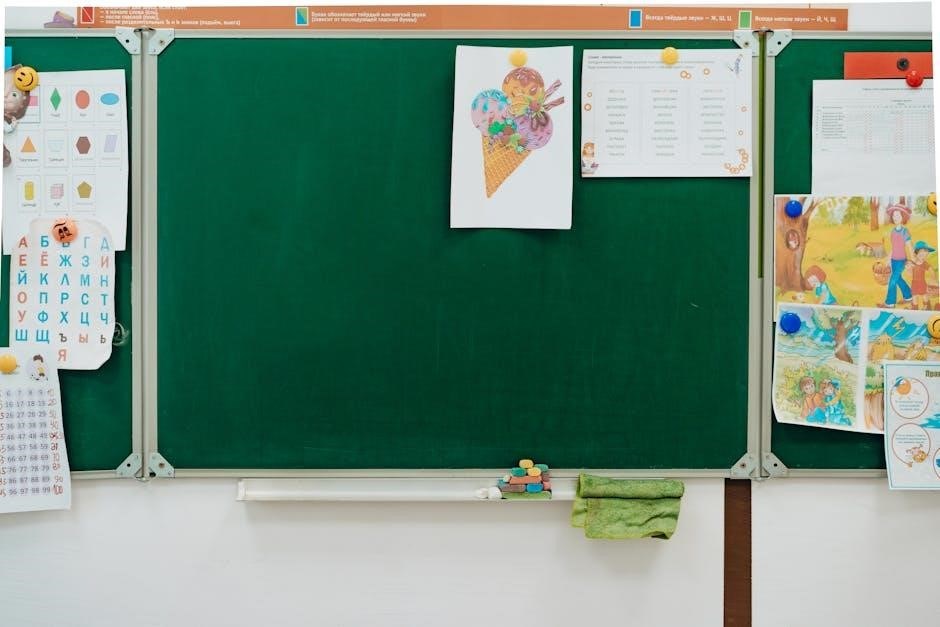
Seamlessly weaving play into kindergarten assessments transforms evaluation into a natural‚ engaging experience for young learners. Instead of formal tests causing anxiety‚ observe children during activities like building with blocks‚ dramatic play‚ or art projects. These scenarios reveal crucial skills – problem-solving‚ communication‚ collaboration‚ and creativity – often missed by traditional methods.
For example‚ a child constructing a tower demonstrates spatial reasoning and fine motor skills. During pretend play‚ assess language development and social interaction. Utilize checklists or anecdotal notes during these play-based observations to document progress. Free PDF assessment resources can provide frameworks for these observations‚ guiding teachers to focus on specific developmental milestones within playful contexts. This approach offers a more authentic and comprehensive understanding of each child’s capabilities‚ fostering a positive assessment experience.
Observational Assessment Techniques
Effective observational assessment is paramount in kindergarten‚ offering insights beyond standardized tests. Techniques include anecdotal records – brief‚ focused notes on specific behaviors – and checklists detailing key skills. Frequency counts track how often a behavior occurs‚ while running records provide a detailed narrative of a child’s actions over a set period.
These methods require careful planning and consistent implementation. Teachers should define clear observation goals and utilize a systematic approach. Free PDF assessment resources often include sample observation forms and guides. Remember to observe children in various settings – whole group‚ small group‚ and individual play – to gain a holistic view. Documenting observations objectively‚ avoiding interpretations‚ is crucial for accurate assessment and informed instructional decisions. This data‚ combined with other assessment tools‚ paints a complete picture of each child’s development.
Benefits of Play-Based Assessment
Play-based assessment offers a natural and engaging way to evaluate kindergarteners. Children demonstrate skills more authentically during self-directed play‚ reducing anxiety associated with formal testing. This approach reveals problem-solving abilities‚ social interactions‚ and creativity – areas often missed by traditional assessments.
Free PDF resources can guide teachers in structuring play-based observations‚ providing checklists for specific skills. Observing children building with blocks reveals spatial reasoning‚ while dramatic play showcases language and social-emotional development. Play-based assessment fosters a positive learning environment and provides valuable insights into each child’s unique strengths and needs. It allows for continuous monitoring and informs individualized instruction‚ ultimately supporting holistic development and school readiness. It’s a less stressful‚ more revealing method.