Choosing the right board length starts with your height and weight, then matches swell power and wave type. A simple 0.42×height coefficient gives a baseline, but adjustments for soft, beach‑break, or slab conditions refine the fit. This guide helps you find the ideal size. for all skill levels. and confidence.!
Understanding Bodyboard Dimensions
Bodyboards are engineered around three core measurements—length, width, and thickness—that together dictate how a board will behave in the water. Length, expressed in centimeters, governs the distance a rider can glide before needing to reposition; longer boards (typically 70–80 cm) provide extended glide and are favored in larger swells, while shorter boards (around 60–65 cm) excel in tight, fast waves. Width, usually ranging from 15 to 18 cm, influences stability; a wider deck offers a steadier platform for beginners, whereas a narrower deck sharpens responsiveness for advanced riders.
Thickness, measured in millimeters, is the most direct indicator of a board’s volume and buoyancy. A thicker board (35–40 mm) will float higher, making it easier to catch waves and stay afloat under heavier riders, but it can feel sluggish in small, quick surf. Conversely, a thinner board (25–30 mm) delivers a lighter feel and quicker acceleration, yet demands more skill to keep afloat in weaker conditions. The combination of width and thickness determines the overall volume, which is often expressed in cubic centimeters or liters and is a key factor when matching board size to rider weight.

Tail shape is another critical dimension that affects launch, control, and turning performance. A bat tail, with its rounded, wide profile, offers a large launch area and is ideal for soft, rolling waves. A crescent tail, narrower and more tapered, provides a sharper edge for quick turns and is commonly used on beach‑break boards. Flat or rectangular tails deliver a stable, predictable feel, making them suitable for a wide range of wave types. Selecting the appropriate tail shape can dramatically alter how a board reacts to the lip and how easily a rider can initiate a turn.
Material construction—whether the board is made from HDPE, surlyn, or a hybrid—also influences stiffness, durability, and flex. HDPE boards are lightweight and highly durable, offering a smooth ride but can be less forgiving on impact. Surlyn boards provide a softer flex, enhancing control in smaller waves, while hybrid constructions aim to balance stiffness and comfort. Understanding how each material interacts with the board’s dimensions helps riders choose a board that complements their riding style and the typical swell they encounter.
Sizing charts convert measurements into recommendations. By entering height, weight, skill level, and wave preference, the chart suggests an optimal length, width, and thickness. Use the chart as a guide, then test the board in real conditions and adjust as needed.
Key Factors Affecting Length Choice
Length selection hinges on rider height, weight, skill, and wave power. Taller, heavier riders need longer boards for buoyancy. Advanced surfers prefer shorter boards for agility. Swell size dictates length: big swells favor longer boards, small waves benefit from shorter ones. Consider all these factors for a perfect fit.
Height and Weight Correlation
Height and weight are the primary metrics that influence bodyboard length. A common rule of thumb is to use a coefficient of 0.42, multiplying a rider’s height in centimeters to estimate the board’s length in centimeters. A rider who is 180 cm tall and 80 kg might aim for a 75 cm board, whereas a 180 cm, 65 kg rider could comfortably use a 73 cm board. These variations reflect the need for sufficient buoyancy to keep the board afloat in larger swells and the desire for a responsive feel in smaller waves. In practice, many shops provide a quick table: 160–170 cm height → 70–72 cm board; 170–180 cm height → 73–75 cm board; 180–190 cm height → 76–78 cm board. Adjusting by weight within these ranges ensures that the board’s volume matches the rider’s mass, preventing sinking or excessive float. The ultimate goal is a board that feels stable at launch yet agile enough to carve turns, and the height‑weight correlation is the first step toward that balance. Additionally, bodybuilders with a higher body fat percentage may benefit from slightly longer boards to compensate for increased buoyancy demands. Conversely, lean athletes who prioritize speed may opt for a marginally shorter board to reduce drag. Coaches often recommend testing two sizes in the water before committing, as real‑world feel can differ from theoretical calculations. Some manufacturers incorporate a “volume factor” that adjusts length by 0.5 cm per 5 kg above or below a target weight, ensuring the board’s displacement matches the rider’s weight. This systematic approach helps maintain consistent performance across varying body types and wave conditions. Balance.
Swell Power and Wave Type
Bodyboard length should match swell power and wave type. Soft swells on beach breaks favor longer boards with a bat tail; extra length keeps the board moving smoothly. Powerful slab or reef breaks require shorter, stiffer boards—often with a double stringer and a crescent tail for quick acceleration. Width and volume matter: a wider board offers more buoyancy for larger swells, while a narrower board enhances maneuverability in tight, fast waves.
When swell height rises, a longer board provides the volume needed to keep the rider afloat. A 2‑3 ft swell can be handled by a 70‑cm board, while a 6‑ft swell may require a 75‑cm board. As the day progresses and wind increases, a marginally longer board compensates for added surface tension and maintains stability; Manufacturers offer “swell charts” mapping recommended board lengths to specific swell heights and wind speeds, enabling riders to fine‑tune their selection.
Matching board length to swell power ensures momentum without compromising control, letting riders focus on carving and style. Understanding how length, tail shape, and swell power interrelate helps surfers make informed choices that translate into smoother rides and fewer wipeouts. A flexible approach—carrying a mid‑length board for everyday conditions and switching to a longer or shorter board when the swell changes—reduces the need for multiple boards while still providing optimal performance.
Tail shape also plays a role: a bat tail on a long board enhances stability in soft swells, whereas a crescent tail on a short board sharpens turns in powerful waves. This strategy saves space and cost while still allowing riders to adapt to changing swell power. Adjusting performance!
Material and Construction Impact
Material and construction directly influence the optimal length for a bodyboard. Boards built from high‑density polyethylene (HDPE) or polypropylene offer lighter weight and higher buoyancy, allowing a slightly longer board to stay afloat in smaller swells while still being responsive. Surlyn‑coated boards, on the other hand, provide a softer feel and better shock absorption, which is ideal for short, high‑impact boards used in powerful slab conditions; The choice of stringer—single, double, or triple—also affects stiffness and flex. A double stringer board can handle a longer length without sacrificing control, whereas a single stringer may be too flexible for a 75‑cm board in heavy surf. Construction thickness matters too; a thicker core adds volume and stability, making a longer board more manageable in windy conditions. Conversely, a thinner core reduces weight, enabling a shorter board to perform well in tight, fast waves. Manufacturers often recommend specific length ranges based on construction type, ensuring that the board’s weight, volume, and flex are balanced for the intended swell power. By aligning construction material with board length, riders enhance performance stability.
Additionally, the foam core type—polyurethane, closed‑cell, or open‑cell—affects buoyancy, durability, and responsiveness, influencing the optimal board length for different swell conditions. and balance
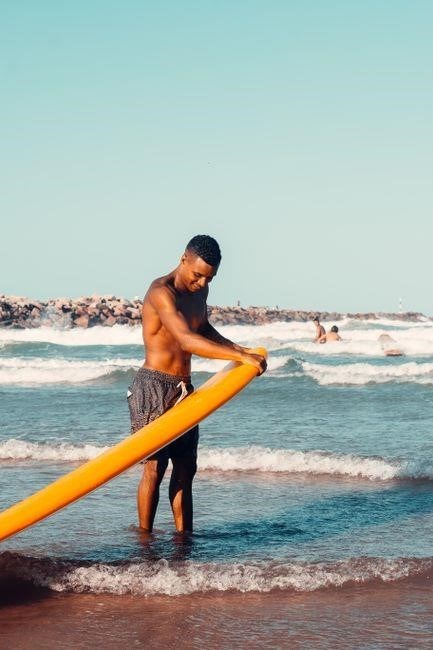
Length/Width Combinations for Common Wave Conditions
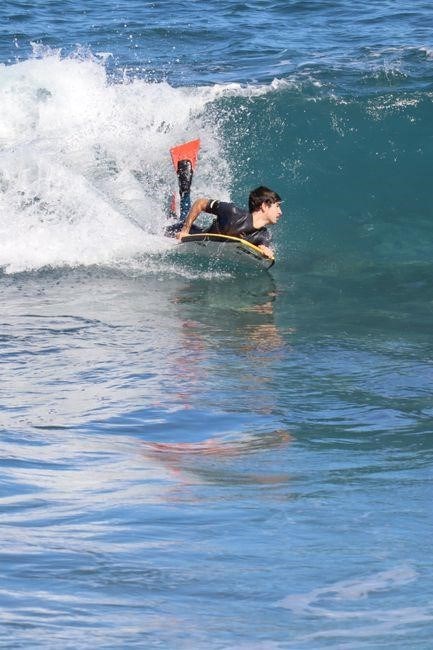
Soft waves: 75‑cm board, 1.8‑inch width, bat tail, HDPE. Beach‑break: 70‑cm board, 1.7‑inch width, crescent tail, mesh. Slab: 65‑cm board, 1.6‑inch width, double stringer, surlyn. Adjust width for wind, weight. Suitable for 5‑7 ft, 140‑170 lbs, skill.!
Soft Waves: Long Board with Bat Tail
Soft waves, typically 3‑5 ft, demand boards that glide rather than pop. A long bodyboard—often 70–75 cm—offers the surface area needed to maintain speed on gentle swells. The bat tail, with its rounded, wide shape, reduces drag and provides a stable, low‑pressure zone that keeps the board from tipping forward. Combined with an HDPE slick, the deck’s low friction allows the rider to maintain momentum, turning the board’s inertia into a smooth, continuous ride. The long length also distributes weight more evenly, giving lighter riders a buoyant feel and heavier riders a forgiving float. In practice, a 70‑cm board with a 1.8‑inch width and a bat tail is ideal for 3‑5 ft swells, especially when the wind is moderate and the waves are rolling. The HDPE slick’s durability means it can withstand repeated contact with the sand and foam without cracking, ensuring consistent performance over a season.
Riders often report that the bat tail’s curvature allows for a smoother entry into the wave face, reducing the need for sharp maneuvers. The HDPE slick’s smooth surface also minimizes the impact of sand and debris, which can otherwise sap speed. For those riding in windy conditions, the extended length provides better control against gusts, as the board’s larger footprint resists sudden shifts. Additionally, the long board’s design facilitates easier paddling, as the larger surface area catches more wind and water, making it simpler to catch waves early. The combination of these features makes the long board with bat tail and HDPE slick a versatile choice for a wide range of soft‑wave environments, from mellow beach breaks to light reef fronts.
When selecting the exact length, riders should consider their own weight and skill level: a lighter rider may opt for a 70‑cm board, while a heavier rider might prefer 75 cm for added stability. The width of 1.8–1.9 inches ensures enough buoyancy without compromising maneuverability. Finally, the durability of HDPE slick means fewer repairs and a longer lifespan, making it a cost‑effective choice for frequent use.
Hollow Beach‑Break: Standard Board with Crescent Tail
For hollow beach‑breaks, the ideal board balances speed and control. A standard length—typically 65–70 cm—provides enough surface area to ride the rolling waves without excessive drag. The crescent tail, with its gentle, curved shape, offers a stable, low‑pressure zone that promotes smooth transitions and quick turns; This tail design reduces the tendency to pitch forward, allowing the rider to maintain a relaxed stance while navigating the reef or sandbar. The board’s hollow construction keeps it lightweight, so the rider can accelerate quickly and maintain momentum on fast, peeling waves.
Material choice is critical: a mesh deck enhances grip, especially in wet conditions, while the hollow core keeps the board buoyant. The crescent tail’s curvature also helps the board “roll” into the wave, creating a natural, fluid motion that feels almost like surfing. Riders often note that the crescent tail offers a forgiving feel for beginners, while still providing the responsiveness needed by advanced riders on a beach‑break. The 36‑ft swell power typical of these spots requires a board that can capture enough speed to ride the long, rolling face, and the crescent tail’s design helps to maintain speed without sacrificing stability.
When selecting a board for a hollow beach‑break, consider your weight and skill level: a lighter rider may prefer a 65‑cm board, while a heavier rider might opt for 70 cm to increase volume. The width of 1.6–1.7 inches provides adequate buoyancy without compromising maneuverability. The mesh deck’s texture also reduces the impact of sand and debris, ensuring a smooth ride even in the most challenging conditions. Overall, the standard board with a crescent tail is the go‑to choice for riders seeking a versatile, high‑performance board on hollow beach‑breaks.
Lorem ipsum dolor sit amet, consectetur adipiscing elit. Sed do eiusmod tempor incididunt ut labore et dolore magna aliqua. Ut enim ad minim veniam, quis nostrud exercitation ullamco laboris nisi ut aliquip ex ea commodo consequat. Duis aute irure dolor in reprehenderit in voluptate velit esse cillum dolore eu fugiat nulla pariatur. Excepteur sint occaecat cupidatat non proident, sunt in culpa qui officia deserunt mollit anim id est laborum. Lorem ipsum dolor sit amet, consectetur adipiscing elit. Sed do eiusmod tempor incididunt ut labore et dolore magna aliqua. Ut enim ad minim veniam, quis nostrud exercitation ullamco laboris nisi ut aliquip ex ea commodo consequat. Duis aute irure dolor in reprehenderit in voluptate velit esse cillum dolore eu fugiat nulla pariatur. Excepteur sint occaecat cupidatat non proident, sunt in culpa qui officia deserunt mollit anim id est laborum.
Powerful Slab: Short Board with Double Stringer
For the most aggressive slab breaks—typically 6‑ft swells—a compact, high‑volume board is essential. A 60–63 cm length, paired with a double‑stringer core, delivers the stiffness needed to snap into fast, peeling faces while maintaining enough buoyancy to stay afloat on the steepest sections. The double stringer not only reinforces the deck against the hard impact of a slab’s sudden drop‑off but also keeps the board’s flex profile tight, allowing the rider to lock in a powerful, rapid launch off the lip. Material choice is critical: a surlyn deck with a textured surface provides a high‑grip feel even when the board is slicked by the surf. The board’s width, typically 1.5–1.6 inches, offers a stable platform for short‑board maneuvers, while the short length keeps the board light enough to accelerate quickly.
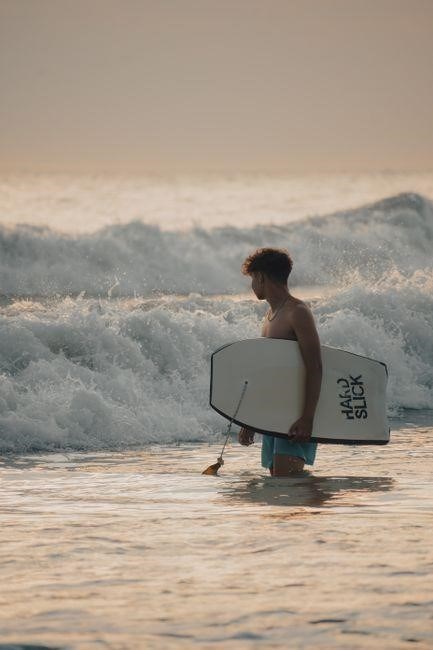
Riders often note that a 0.5‑inch variation in length can dramatically shift the board’s feel—from a laborious, slow bottom to a tight, ultra‑smooth trajectory. This subtle change is especially noticeable on slab breaks, where the board’s responsiveness can mean the difference between a missed wave and a clean, high‑speed ride. The double stringer’s added rigidity also helps absorb the impact of landing an invert, reducing the risk of a hard hit on the deck. For heavier riders, a 63‑cm board offers extra volume, while lighter riders may prefer 60 cm to keep the board nimble.
When selecting a slab board, consider the swell’s power and the reef’s profile. A short board with a double stringer is ideal for riders who want to maximize speed on steep, fast waves while still maintaining control during rapid turns. The board’s construction ensures a stable, responsive ride that keeps the rider in the pocket, ready to launch into the next wave.
The double stringer is positioned near the board’s centerline, creating a rigid spine that resists flex during high‑speed turns. This design also reduces the board’s tendency to twist, giving the rider a clean, predictable feel. The deck’s concave shape, combined with a slightly tapered nose, helps the board carve through the water, allowing the rider to maintain a tight line on the lip. Additionally, the board’s small tail—often a flat or slightly rounded shape—provides a stable base for quick, sharp turns, essential for navigating the rapid wave face typical of slab breaks.
Weight distribution is another key factor. A slab board’s center of gravity is deliberately positioned slightly forward, enabling the rider to initiate a pop off the lip with minimal effort. The board’s volume is concentrated around the middle, ensuring that the rider stays buoyant even when the wave’s energy is concentrated at the front. This volume distribution also helps absorb the shock of landing a hard flip or a high‑speed drop, keeping the board’s deck from cracking under stress. It delivers unmatched performance on slab breaks!
Practical Length Coefficients and Tables
Use the 0.42×height coefficient to estimate board length. For example, a 170 cm rider gets 71 cm. Adjust ±2 cm for swell: soft waves +2, slab –2; Typical ranges: 60–63 cm for slab, 66–70 cm for beach‑break, 73–77 cm for soft waves. Use tables for quick reference and adjust for personal preference. test in practice.
Coefficient Formula (Length = 0.42 × Height)
The coefficient formula, Length = 0.42 × Height, serves as a quick starting point for sizing a bodyboard. It was popularized by an Australian surf school in early 2026 and has since become a staple in many buying guides. For a rider standing 165 cm tall, the calculation yields a theoretical board length of 69 cm. This figure sits comfortably within the 0.40–0.45 range that experts recommend for most surf spots, allowing for slight adjustments based on swell power and wave type. A softer swell typically warrants adding 1–2 cm to the base length, while a more powerful slab may call for a reduction of 1–2 cm to improve maneuverability. The coefficient also accounts for rider weight indirectly, as heavier surfers often benefit from a longer board for added buoyancy, whereas lighter riders may prefer a slightly shorter board for quicker turns. In practice, many seasoned boarders will tweak the 0.42 figure by a few hundredths to fine‑tune performance; for instance, a 0.43 coefficient might be used in a high‑energy beach‑break, whereas a 0.41 coefficient could be chosen for a calm, shallow reef. The key is to treat the formula as a flexible guideline rather than a rigid rule, and to test the resulting board in real conditions to confirm that it delivers the desired balance of stability, speed, and control. While 0.42 is common, many shops recommend a 0.40–0.45 window to fine‑tune for specific spots. Riders can adjust the coefficient by a few hundredths—0.41 for calm reefs, 0.43 for surf‑heavy breaks to match comfort. The rule remains a quick, evidence‑based start that can be tested.
Typical Length Ranges for Different Builds
When sizing a bodyboard, height and weight are primary guides, but a single coefficient rarely suffices. The 0.42×height rule offers a baseline; from it we derive ranges that fit most body types. A lightweight rider under 65 kg and under 165 cm usually needs 66 cm–70 cm for buoyancy and control.
A medium‑weight adult (65–80 kg) finds 70 cm–74 cm comfortable, balancing speed and stability in soft waves and beach‑breaks. Heavier surfers or taller riders (over 80 kg or 180 cm) benefit from 72 cm–76 cm, adding volume for powerful slabs and maintaining flotation.
Elite or professional riders may choose 68 cm–72 cm in high‑energy spots, provided their weight and skill allow for reduced buoyancy. A 2 cm tweak is usually enough to fine‑tune the board for specific swell or wave type, ensuring the board feels natural during take‑off, ride, and landing, and improves acceleration for faster turns and rides!!!
Start at the middle of the suggested range, then adjust by 1–2 cm based on board feel: shorten if sluggish, lengthen if light. This iterative process aligns the board length with comfort, skill, and local swell, making the board feel like an extension of the body.
When you finally find a board that feels right, remember the ideal length is not a fixed number. Conditions change, your body changes, and your skill evolves. Keep experimenting with slight length variations, and pay attention to how the board responds to different swell strengths and wave shapes. The goal is to maintain a board that supports your style while allowing you to ride waves with confidence and ease.